
Link Building Automation: The Right Way vs The Spammy Way
I've watched three clients get hit by SpamBrain penalties in the past year. All of them were using 'automated backlink' tools that promised easy wins. There's a line between smart automation and stuff that will wreck your site. Here's where it is.
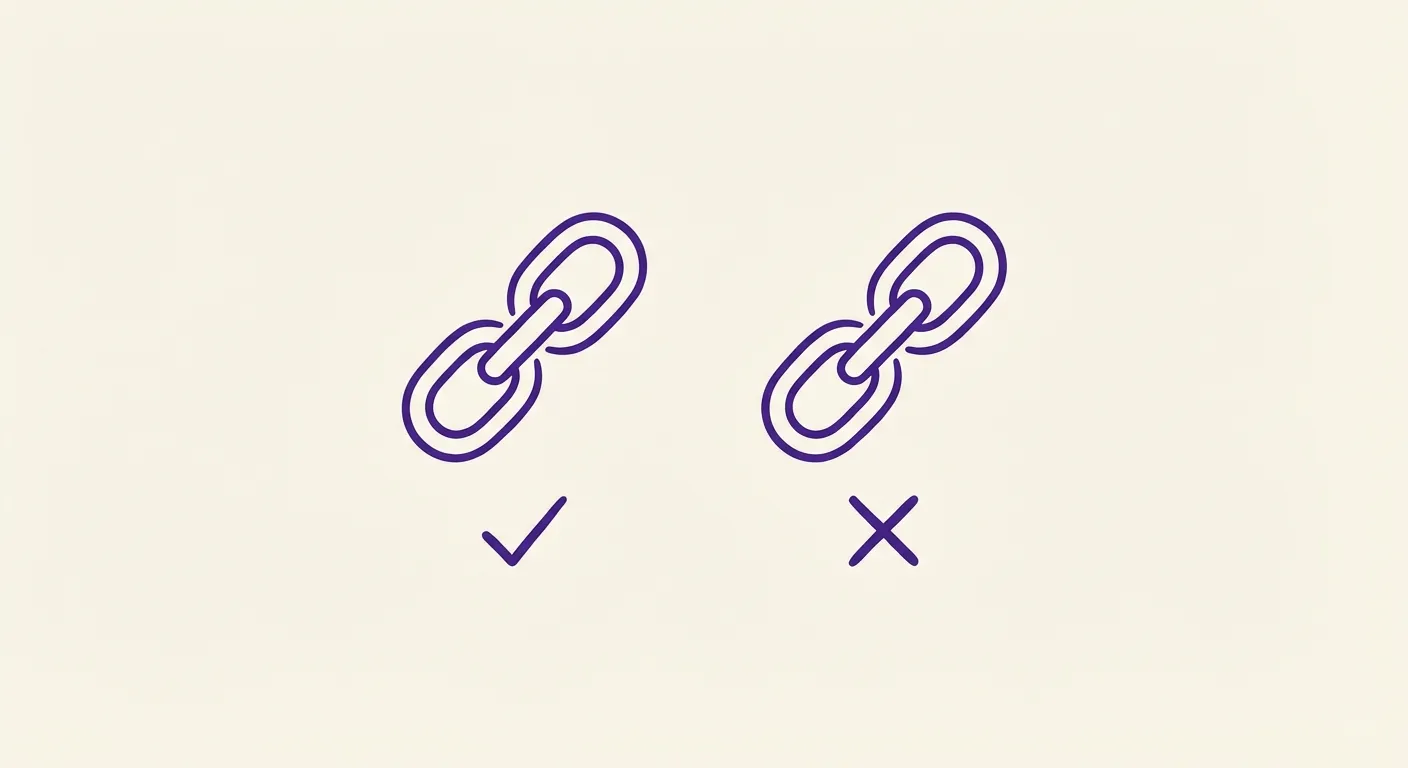
Let me save you a lot of pain: link building automation can go one of two ways.
You can spend hundreds on tools that promise "automated backlinks" and watch your rankings crater. Or you can use automation the right way and scale up legitimate link building without burning out.
The difference isn't subtle. It's clear, documented, and spelled out in Google's policies. But a lot of SEO tools blur the line on purpose because one approach makes them a lot more money than the other.
So let's cut through the marketing speak and talk about what actually works.
What Google actually says
Google's link spam policy is direct: "Using automated programs or services to create links to your site" is a violation.
Not "might be" a violation. Is.
This isn't new. The policy has been there for years. But in March 2024, Google doubled down with updates targeting scaled content abuse, site reputation abuse, and expired domain abuse. All of these intersect with manipulative link schemes.
The enforcement system is called SpamBrain. It's AI-based, and it's gotten very good at spotting patterns. When it catches you, it doesn't always issue a manual penalty. It just devalues your links. No notification. Your rankings just tank.
And here's the kicker: Google says when they remove the benefit of spammy links, that benefit "cannot be regained." You can't fix it with the disavow tool. You can't reverse it. You're starting over.
So when I say automation can get you penalized, I mean it can quietly destroy months or years of SEO work.
The spammy stuff (what gets you caught)
Let's talk about what crosses the line.
Automated link creation
Any tool that creates links for you is spam. Full stop.
This includes:
- Automated forum and blog comment bots
- Widget links that auto-embed on other sites
- Press release syndication where the goal is just links
- PBN (Private Blog Network) automation
- Mass directory submissions
- Auto-generated Web 2.0 properties
These tools exist. They get pitched as "SEO automation." They'll get you penalized.
Scraped email outreach
A lot of link builders use automation for outreach. That can be fine (more on that in a minute). But scraping emails and blasting thousands of templated pitches is not fine.
As of February 2024, Gmail and Yahoo require:
- SPF and DKIM authentication (and DMARC for bulk senders)
- Spam complaint rates under 0.3% (aim for under 0.1%)
- One-click unsubscribe on all promotional emails
If you're sending mass emails to scraped lists with no personalization, you're violating these rules. Your emails won't get delivered. And if they do, your spam rate will spike and you'll get blacklisted.
Outreach automation is not the same as outreach spam, but a lot of people use automation as an excuse to spam.
Guest posting at scale
Mass guest posting with keyword-optimized anchor text is a link scheme. Google says this explicitly.
If you're using automation to distribute the same article to 50 sites with the same anchor text link, you're violating the policy. Even if you're writing "unique" articles, if the primary goal is just to get links at scale, it's spam.
Buying links (even if you call it something else)
Paying for links is allowed, but only if you use rel="sponsored" or rel="nofollow" to tell Google the link is compensated. If you're paying for links that pass ranking credit, that's a violation.
A lot of "link insertion services" will tell you they're placing "editorial links." They're not. They're selling you links. If you pay for it, it needs to be qualified.
The legit stuff (what actually works)
Here's where automation is not just allowed, it's useful.
You can't scale link building manually. You'd spend 90% of your time on research and outreach logistics. Automation should handle the busywork so you can focus on strategy and relationships.
Prospecting and research
This is the most obvious one. Tools like Ahrefs and Semrush can:
- Find competitor backlinks
- Discover resource pages in your niche
- Identify unlinked brand mentions
- Spot broken links on relevant sites
None of this creates links. It just finds opportunities. You still have to reach out and pitch.
This is 100% compliant.
Contact discovery and verification
Finding the right person to email is tedious. Tools like Hunter and Snov.io automate this by pulling email addresses from domains and verifying they're valid.
This keeps your bounce rate low and your sender reputation clean, which matters given the 2024 email rules. It's workflow automation, not link creation.
Outreach management
This is where the line gets fuzzy, but it shouldn't.
Outreach CRMs like Pitchbox, BuzzStream, and Respona help you:
- Organize prospect lists
- Track who you've contacted
- Schedule follow-up emails
- Monitor replies
You can automate the sequence (send an initial email, wait 3 days, send a follow-up). But you can't automate the decision to grant a link. That's on the editor at the target site.
The key is personalization. If your email looks like it could have been sent to anyone, it's spam. If it references the specific site, article, or person you're reaching out to, it's legitimate outreach.
Broken link building
Crawlers can scan sites for broken outbound links. You can automate the discovery of these opportunities and even automate the first email ("Hey, I noticed a broken link on your page about X").
But the pitch still has to be good, and the replacement content has to be relevant. Automation just scales up the research.
Unlinked mention tracking
You can set up alerts to find mentions of your brand or content that don't include a link. Then you reach out and ask for citation.
This is one of the highest-converting link building tactics, and automation makes it scalable.
Internal linking
This isn't about backlinks, but it's worth mentioning: automating internal link analysis is not just allowed, it's smart. Tools like Ahrefs Site Audit can crawl your site and suggest internal linking opportunities.
This distributes PageRank better and improves user navigation. It's pure upside.
Where the line is (and why it matters)
The distinction is simple:
Automate the workflow, not the link.
If a tool helps you find opportunities, organize outreach, or manage relationships, that's fine. If it places the link for you without a human editor making a decision, that's spam.
It's about effectiveness, not just avoiding penalties.
Links that are editorially placed on relevant, high-quality sites actually move the needle. Links that are auto-generated on directories or comment sections don't. Google ignores them.
So even if you don't get penalized, you're wasting money.
Where Revised fits in
This is where Revised fits in: as a marketplace, not an automation tool.
We don't place links for you. We vet the hard, tedious part that most link builders skip because it's too time-consuming:
- Finding dead domains with backlinks from Wikipedia, Reddit, Hacker News, etc.
- Verifying those domains' age, referring domains, and clean-history status
- Listing them for sale, outright, to whoever wants to own that history
The links already exist. They're editorial. They were placed by trusted sources. Buying the domain means you own the asset those links point to. What you do with it afterward, including setting up a redirect, is on you.
This is fundamentally different from guest posting automation or PBN software. Nobody's creating new links. You're buying a domain whose links broke when the site went offline, and putting it back to work.
Because the links are from authoritative sources in context, they actually work. They're exactly the kind of links Google wants to reward.
If you're a startup or small business, you can't compete with enterprise SEO teams on volume. But you can compete on quality. That's what Revised is built for.
What about AI?
A lot of people are asking whether AI changes the automation rules.
Short answer: No.
Google's March 2024 update explicitly targeted "scaled content abuse," which includes AI-generated content created primarily to manipulate rankings. If you're using AI to write 500 guest posts with embedded links, that's spam.
But using AI to draft outreach emails, analyze backlink data, or generate content ideas? That's fine. It's the same distinction: automate the process, not the manipulation.
Red flags to watch for
If a tool or service promises any of these, run:
- "Guaranteed backlinks"
- "Automated backlink creation"
- "500 links in 30 days"
- "We'll publish on high-DA sites" (without mentioning
rel="sponsored") - "PBN access"
These are either outright scams or link schemes waiting to blow up.
Legitimate link building tools help you find opportunities and manage outreach. They don't promise links. Because links are earned, not bought or auto-generated.
The email deliverability factor
This is newer and a lot of people are ignoring it, which is a mistake.
Gmail and Yahoo now enforce strict sender requirements. If you're doing outreach at any scale, you need:
- SPF and DKIM set up on your domain
- A DMARC policy (can be set to
p=noneinitially) - Spam complaint rates below 0.3%
- One-click unsubscribe on all promotional emails
If you violate these rules, your emails don't get delivered. Period.
This means mass outreach with no personalization is dead. You can't scrape a list, load it into Mailshake, and blast 10,000 generic pitches. Your sender reputation will tank and you'll get blacklisted.
The new rules effectively force you to do outreach right: smaller lists, better targeting, real personalization.
Which is exactly what Google wants on the link side anyway.
Auditing your current link building
If you're already using automation, here's how to check if you're in the clear:
Check for manual actions. Go to Google Search Console and look for manual actions. If you have one for "unnatural links," you're already flagged.
Run a backlink audit. In Ahrefs or Semrush, look for patterns like lots of links from low-quality directories, keyword-rich anchor text from guest posts, links from sites with no topical relevance, and PBN footprints (same IP, same design, etc.).
Check your email deliverability. If your outreach open rates are under 20%, something's wrong. You might be hitting spam folders.
Review your tools. If you're paying for "automated backlinks," cancel immediately.
If you find problems, prioritize building new, editorial links. The disavow tool is a last resort and won't recover lost ranking benefits from algorithmic devaluation.
What actually scales
If you want to scale link building without risking a penalty, focus on these tactics:
Digital PR - Pitch journalists and bloggers with newsworthy stories. Use tools like Pitchbox to manage the outreach.
Original data - Publish studies or surveys that sites want to cite. Automate the promotion list building.
Broken link building - Automate the discovery, personalize the pitch.
Unlinked mentions - Set up automated alerts, reach out manually.
Resource page inclusion - Find resource hubs in your niche, pitch inclusion based on merit.
And if you're an early-stage company, consider backlink building strategies that work for startups specifically.
All of these tactics can be automated at the research and outreach level. None of them automate the link itself.
The bottom line
Automation isn't the enemy. Shortcuts are.
If you're using automation to skip the hard work of creating something link-worthy, pitching it to the right people, and building relationships, you're going to fail. Google's systems are too good.
But if you're using automation to handle the tedious parts (research, contact discovery, outreach tracking) so you can focus on strategy and quality, you'll win.
The right tools save time. The wrong tools waste money and destroy rankings.
Choose carefully.
Browse the marketplace and see the vetting we do before a domain ever gets listed.