
Generative Engine Optimization (GEO): The Complete Guide for 2025
My organic traffic dropped 23% before I figured out what was happening. AI was answering questions about my topic without citing me. Here's everything I've learned about getting cited by ChatGPT, Perplexity, and Google's AI.
Google used to be the gatekeeper. You optimised for their algorithm, ranked in their results, got clicks. Simple.
That world is ending.
ChatGPT now handles over 80% of AI search traffic. Perplexity is growing at double-digit rates. Google's AI Overviews appear on more than 11% of all queries. When users ask these systems a question, they get a synthesised answer pulled from across the web. Sometimes with citations. Sometimes without.
The question isn't whether AI will change search. It already has. The question is: will your content be the source AI recommends, or will you disappear entirely?
Welcome to Generative Engine Optimization.
What is GEO anyway?
Generative Engine Optimization (GEO) is the practice of optimising your content to be discovered, selected and cited by AI-powered search engines. The term was formally introduced in a 2023 academic paper that established both the framework and early evidence for this new discipline.
The researchers proposed a black-box optimisation framework and a benchmark called GEO-bench. Their key insight? The techniques that work for traditional search engines don't necessarily translate to AI systems. You need a new playbook.
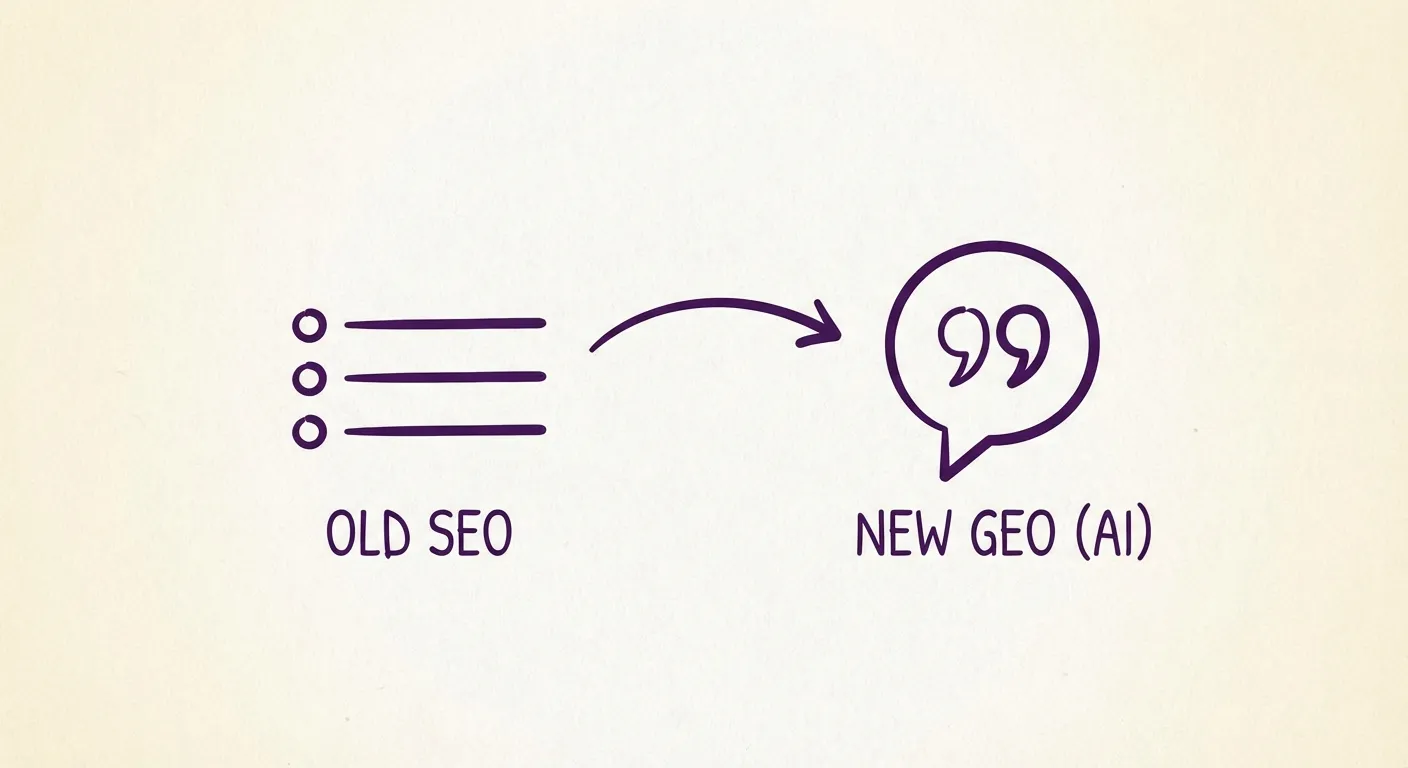
Where traditional SEO aims to rank in a list of blue links, GEO aims to become the source that powers an AI's answer. The goal shifts from "get clicks" to "get cited."
Think of it this way:
- Old model: Rank high, get clicks, win traffic
- New model: Be cited by AI, build authority, win trust (and traffic)
When ChatGPT recommends your product or Perplexity cites your research, that's an endorsement. The AI is essentially saying "this source is trustworthy enough to answer this user's question."
The original GEO research showed that applying specific optimization techniques, like adding citations, quotations and statistics, could boost content visibility in AI responses by up to 40%. On Perplexity specifically, the improvement was 37%.
That's the difference between being invisible and being the answer.
How is this different from regular SEO?
GEO builds on traditional SEO, it doesn't replace it. But the emphasis shifts significantly.
The overlap
Both GEO and SEO care about:
- Technical accessibility (can crawlers reach your content?)
- Content quality and depth
- Authority signals like backlinks
- Clear structure and formatting
- E-E-A-T (Experience, Expertise, Authoritativeness, Trustworthiness)
The differences
SEO optimises for algorithms. GEO optimises for synthesis.
Traditional search engines rank pages. AI engines extract information, blend it with other sources and generate new responses. Your content needs to be:
- Directly answerable - AI prefers content that answers questions explicitly rather than burying the answer in fluff
- Quotable - Short, factual statements that can be extracted verbatim
- Verifiable - Statistics, citations and references to primary sources
- Authoritative - Strong signals that you're a credible source on this topic
SEO chases keywords. GEO chases citations.
In traditional SEO, you target specific keyword phrases. In GEO, you want to become the canonical source for a topic, the one AI naturally reaches for when generating an answer.
SEO wins clicks. GEO wins mentions.
High rankings mean nothing if AI summarises your content without linking to you. GEO focuses on becoming "hard to ignore," the source so authoritative that AI systems must cite it.
How do AI search engines decide what to cite?
This is the million-dollar question. And the research gives us some answers.
Platform breakdown
A study by Profound analysed over 30 million citations across major AI platforms. Here's what they found:
ChatGPT:
- Wikipedia: 47.9% of top citations
- Reddit: 11.3%
- Forbes: 6.8%
- TechRadar: 5.5%
Perplexity:
- Reddit: 46.7%
- YouTube: 13.9%
- Gartner: 7%
Google AI Overviews:
- Reddit: 21%
- YouTube: 18.8%
- Quora: 14.3%
- LinkedIn: 13%
The sources AI trusts most are the same sources humans have always trusted: Wikipedia, established publications, and community-generated content from Reddit and Quora.
AI models learn from human preferences. They're trained on data that reflects what people already consider authoritative.
If you want AI to cite you, you need to be present on the platforms AI trusts. That means building relationships with Wikipedia editors, participating authentically in Reddit communities, earning coverage from journalists and contributing to industry discussions on LinkedIn and Quora.
It also explains why backlinks from authoritative sources matter more than ever. When your site is mentioned or linked from Wikipedia, Reddit or Forbes, you're building the exact trust signals AI engines use to decide who gets cited.
The ranking factors that actually matter
Research from seoClarity and others has identified the factors that consistently drive AI citations:
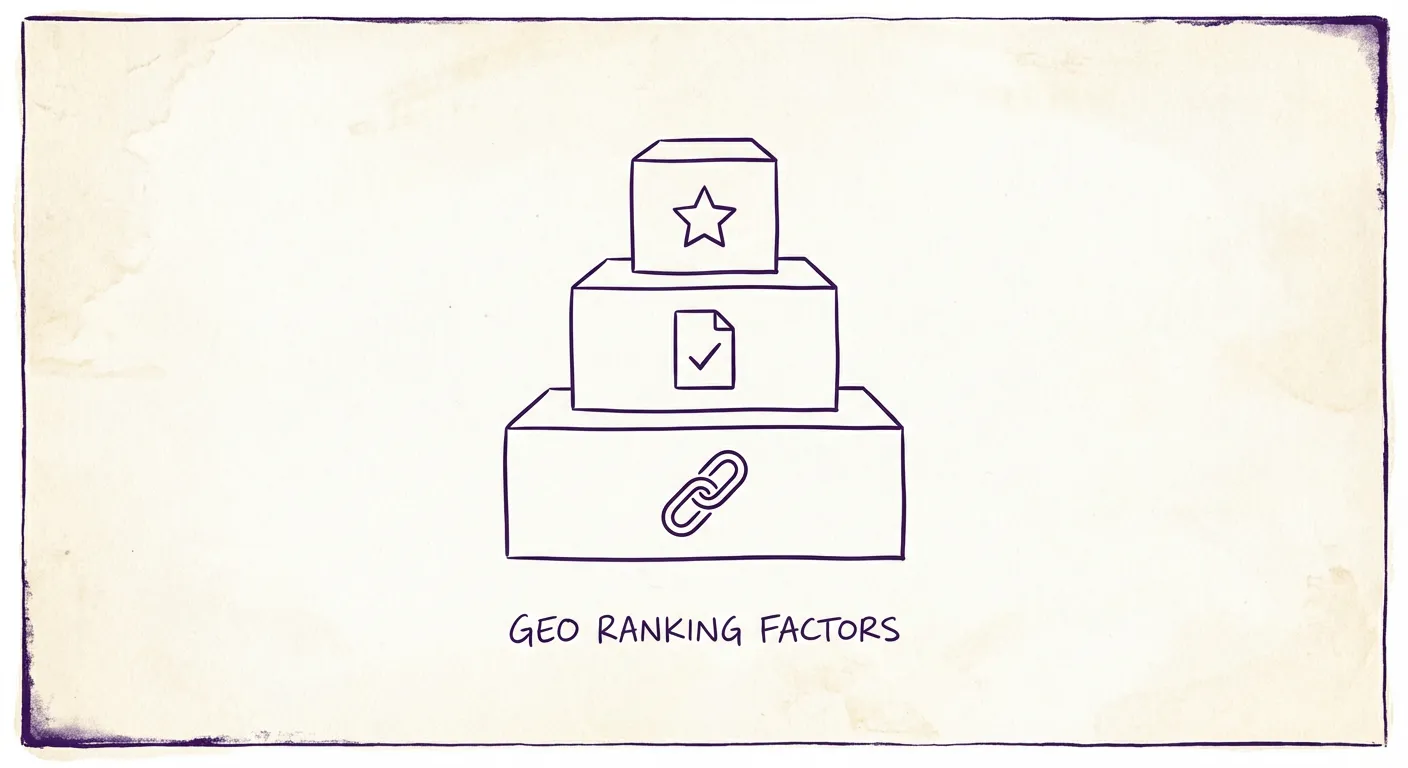
1. Strong Organic Ranking
Here's the kicker: over 99% of sources cited in Google AI Overviews come from the top 10 organic results. If you're not ranking well in traditional search, you're unlikely to be cited by AI.
This is why GEO extends SEO rather than replacing it.
2. Authority and E-E-A-T
AI engines prioritise credible sources. This means named authors with verifiable credentials, transparent methodologies, outbound references to other authoritative sources, consistent entity signals across the web, and high-authority backlinks from trusted domains.
3. Answerability and Structure
Content must be structured for extraction: answer-first writing (lead with the answer, then explain), Q&A sections and FAQs, lists, tables and summaries, clear headings that mirror natural language questions.
4. On-Page Evidence
The foundational GEO research showed that including explicit citations, quotations and statistics significantly boosts visibility. AI likes content it can verify.
5. Freshness
AI engines often favour recent results, especially for time-sensitive queries. Display "last updated" dates and actually update your content regularly.
6. Topical Depth and Semantic Coverage
AI engines reward comprehensive coverage. Rather than thin pages targeting individual keywords, build content hubs that demonstrate deep expertise across a topic. Cover related sub-questions, anticipate follow-ups and demonstrate thorough understanding of your subject matter.
This is the opposite of old-school SEO where you might create separate pages for every keyword variation. AI understands semantic relationships. It knows "how to optimise for ChatGPT" and "ranking in AI search results" are the same topic. It rewards depth over breadth.
Practical GEO strategies that work
Enough theory. Let's get tactical.
Structure your content for AI extraction
Write like you're writing the answer AI will give.
Lead with the answer. Don't bury it in paragraph five. The first sentence of each section should be extractable as a standalone answer.
Use question-based headings. Instead of "Our Manufacturing Process," write "How Are Your Products Manufactured?" This matches how users query AI.
Add FAQ sections. Explicitly structured Q&A is catnip for AI systems. Use FAQPage schema markup to make it even clearer.
Include tables and lists. Structured data is easier to parse than walls of text. If you're comparing options or listing features, use a table.
Add statistics and cite sources. Numbers make claims concrete. Instead of "AI search is growing," write "AI search traffic grew 30% in two months." Link to your sources. AI engines verify claims by checking citations.
Create summary sections. Add "Key Takeaways" or "In Summary" blocks. These explicit signals help AI identify the most important points to extract.
Build authority that AI can't ignore
This is where most GEO advice falls short. They tell you to "build authority" but not how.
The truth? AI learns authority the same way Google does: through backlinks.
When Wikipedia cites your research, that's a massive trust signal. When Reddit users recommend your product organically, AI learns your brand is credible. When Hacker News discusses your methodology, you become part of the knowledge base AI draws from.
The most effective backlinks for GEO are from exactly the sources AI already trusts:
- Wikipedia (the single most cited source by ChatGPT)
- Reddit (dominates Perplexity citations)
- Established publications (Forbes, TechCrunch, industry outlets)
- Community sites (Hacker News, Stack Overflow, Quora)
This is what Revised does. We find dead domains that already have organic backlinks from these authoritative sources, verify them, and publish the evidence. You reveal the name, register it yourself, and redirect that authority to your site. It's not about gaming AI. It's about starting from the same trust signals humans have always valued.
Optimise for each platform
Different AI engines have different biases. Optimise accordingly.
For ChatGPT:
- Maintain an accurate Wikipedia presence if you qualify for one
- Secure mentions in established publications
- Implement structured data properly
- Focus on factual, verifiable content
For Perplexity:
- Be active on Reddit in relevant communities
- Create content that answers specific questions directly
- Include statistics and primary source citations
- Keep content updated frequently
For Google AI Overviews:
- Rank in the top 10 organically first (non-negotiable)
- Use clear heading structures
- Add schema markup
- Demonstrate E-E-A-T through author bios and credentials
Technical stuff
AI crawlers need access to your content. Make sure you're not blocking them.
Googlebot crawls for Google AI Overviews. Don't block it if you want to appear in AI-generated summaries.
PerplexityBot indexes content for Perplexity search. It respects robots.txt.
OAI-SearchBot surfaces content in ChatGPT's search features. Separate from GPTBot which is used for training.
Ensure your content is publicly accessible (no login walls), fast loading (sub-2 second LCP), properly rendered for crawlers (no heavy JavaScript blocking content), and using semantic HTML that's easy to parse.
Measuring GEO success
Traditional SEO metrics don't fully capture GEO performance. You need new KPIs.
Metrics that matter
AI Share of Voice: How often does your brand appear in AI-generated answers for target queries? Track this manually by querying ChatGPT, Perplexity and Google AI regularly.
Citation Rate: When AI mentions your topic, are you cited? Tools are emerging to track this, but manual sampling works for now.
Referral Traffic from AI: Check your analytics for traffic from chatgpt.com, perplexity.ai and AI-related referrers.
Brand Mentions in AI Responses: Search for your brand in AI tools. What context appears? Is it accurate? Positive?
Tools to watch
The GEO measurement space is still early. Some options:
- Profound tracks AI citations at scale
- Perplexity Analytics (if you're enrolled in their Publishers Program)
- Manual testing - there's no substitute for actually asking AI about your topics and seeing what comes up
The authority advantage
Here's the uncomfortable truth about GEO: you can't hack it.
AI models are trained on the entire internet. They've seen every SEO trick, every thin affiliate page, every content farm. They're explicitly designed to surface trustworthy sources and ignore the rest.
The only sustainable GEO strategy is to actually be authoritative.
That means publishing original research and data, getting cited by sources AI already trusts, building a genuine reputation in your niche, and creating content that experts would endorse.
Revised helps with the citation piece. We find domains with existing backlinks from Wikipedia, Reddit, Hacker News and other high-trust sources, verify them, and list them with their evidence. It's not artificial link building. It's finding genuine authority that already exists in the ecosystem.
When your site has backlinks from the same sources AI trusts most, you become hard to ignore.
Common GEO mistakes
Ignoring traditional SEO. The data is clear: if you're not ranking in organic search, you won't be cited by Google's AI. GEO builds on SEO, not around it. Fix your technical issues first. Build your domain authority. Then layer on GEO tactics.
Keyword stuffing for AI. This doesn't work. AI understands semantic meaning. Writing naturally for humans is writing well for AI. The LLMs powering these systems have seen billions of web pages. They know what authentic content looks like.
Chasing AI at the expense of users. Ultimately, AI learns from human preferences. Content that genuinely helps users will be rewarded by AI too. If real humans cite you, quote you and recommend you, AI will learn to do the same.
Expecting instant results. AI models are updated periodically. Your optimisations may take weeks or months to reflect in AI responses. This isn't like traditional search where changes can show up in days. Have patience.
Over-optimising for one platform. ChatGPT, Perplexity and Google have different biases. A diversified approach is more resilient. What works for Perplexity might not work for ChatGPT. Test across platforms.
Blocking AI crawlers. Some publishers block AI bots to prevent training on their content. That's a valid choice, but understand the trade-off. If you block OAI-SearchBot, you won't appear in ChatGPT search results. If you block PerplexityBot, you're invisible to Perplexity. Decide based on your business model.
Focusing only on content, ignoring links. You can have the best-structured, most comprehensive content on the web. If no authoritative sources link to you, AI has no external signal that you're trustworthy. Content quality and authority signals work together.
What's next for GEO?
The AI search landscape is evolving fast. A few predictions:
Citation standards will formalise. As publishers push back on AI scraping, expect clearer attribution requirements and possibly revenue-sharing models.
New tools will emerge. Just as SEO spawned an industry of tools, GEO will too. Expect better tracking, optimisation and competitive analysis specifically for AI visibility.
Traditional and AI search will merge. Google's AI Overviews are just the start. The line between traditional SERP and AI-generated content will blur.
Authority signals will matter more than ever. As AI gets better at filtering spam and thin content, the moat around genuinely authoritative sources will widen.
Vertical-specific AI will emerge. Already we're seeing AI tools specialised for coding (GitHub Copilot), research (Elicit), and specific industries. Each will have its own citation preferences and optimisation tactics.
Voice search convergence. As more AI queries come through voice assistants, the same GEO principles apply. Alexa, Siri and Google Assistant are increasingly powered by the same LLMs that drive text-based AI search.
Getting started with GEO
You don't need to overhaul everything. Start here:
-
Audit your current AI visibility. Ask ChatGPT and Perplexity about your core topics. Are you mentioned? Cited? Recommended?
-
Review your content structure. Does each page lead with clear answers? Are headings question-based? Is there a FAQ section?
-
Check your authority signals. Where are your backlinks coming from? Are you cited by sources AI trusts?
-
Ensure technical accessibility. Can AI crawlers access your content without barriers?
-
Build a backlink strategy for the AI era. Focus on exactly the sources AI relies on: Wikipedia, Reddit, established publications, industry communities.
The shift to AI-powered search isn't coming. It's here. The websites that adapt, by building genuine authority, structuring content for synthesis and earning trust from the sources AI values, will thrive.
Everyone else will wonder where their traffic went.
Want to start from authority instead of building it? Browse the directory for expired domains with real backlink history from the exact sources ChatGPT, Perplexity and Google trust most. See how it works.